
Appearance
Map and messages
The map
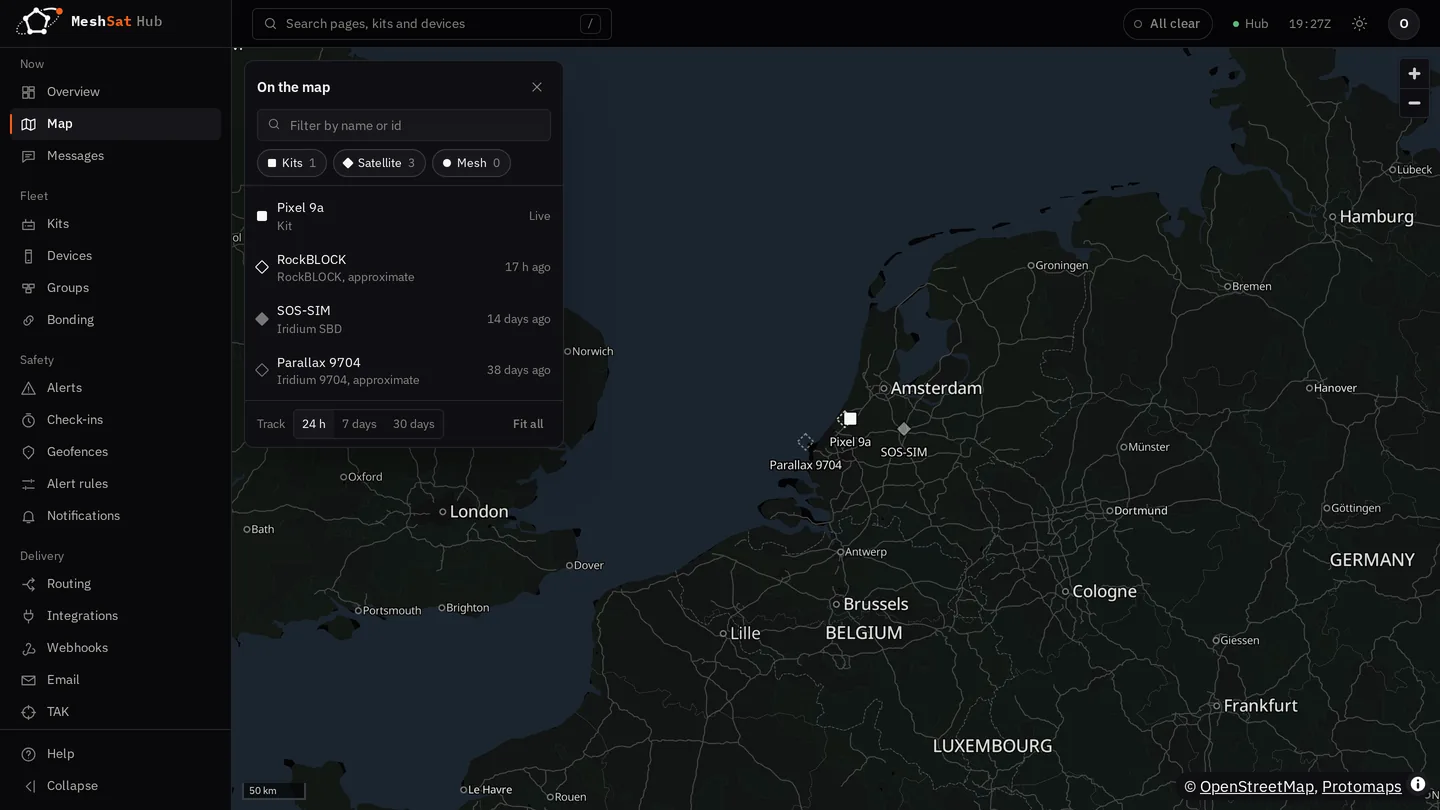
Map shows the last known position of everything you own, full screen, drawn on a vector basemap the Hub serves itself. No tile request leaves for a third party, which matters when the positions are people.
The list beside the map has everything with a position, newest first; pick one and the map flies to it and draws its track for the last 24 hours, 7 days or 30 days. The shape says what it is: a square is a kit, a diamond a satellite device, a circle a mesh node. Older positions fade, a dashed outline is an approximate Iridium fix (a few kilometres), and only a device with an unacknowledged SOS is drawn red. Positions arrive from device reports, from kits, and from TAK markers if you have that integration on.
Messages
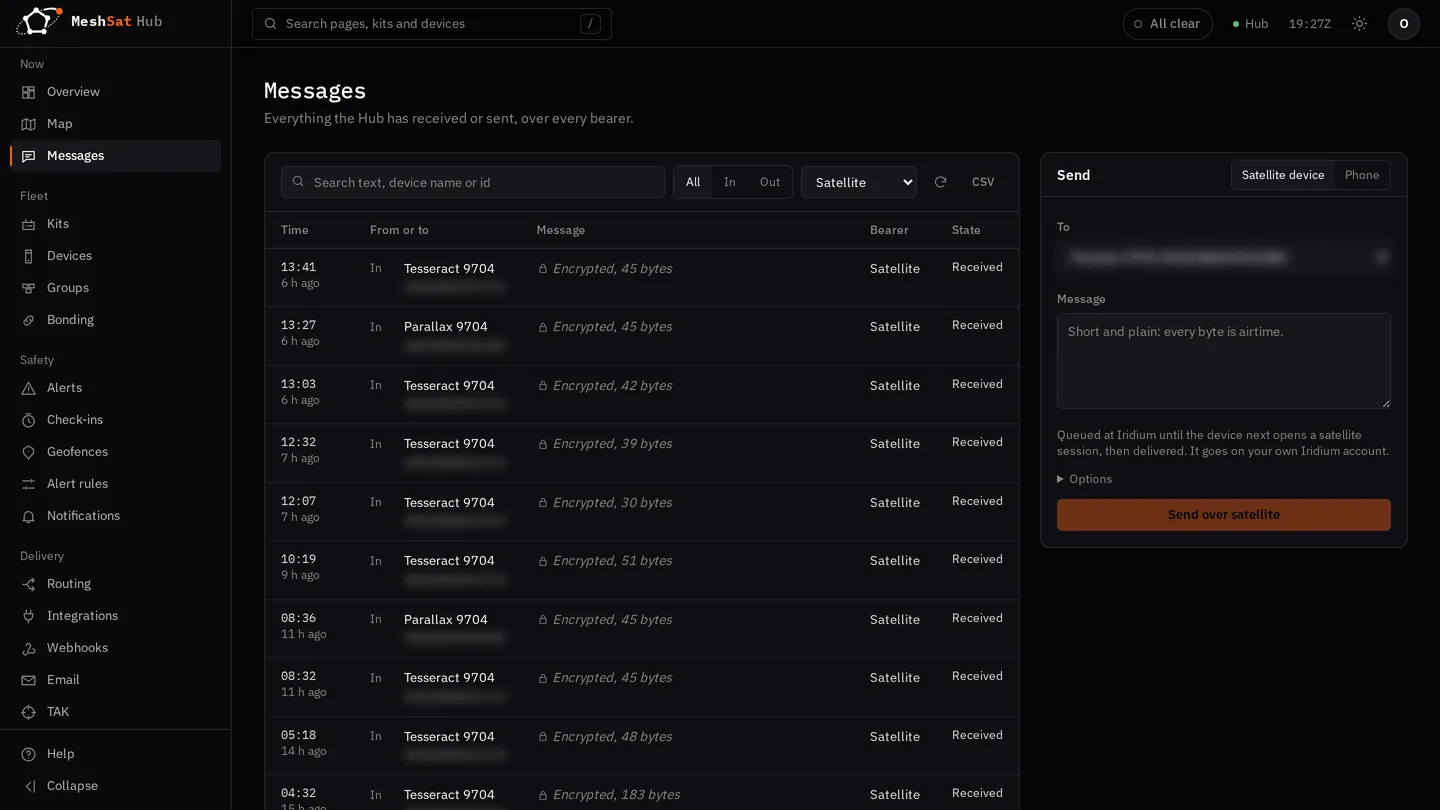
Messages is the log of everything in and out, newest first, with the direction and the bearer each one took. This is where you look when somebody says a message did not arrive: the log shows whether the Hub ever had it, and what happened next. Filter it by direction, by bearer or by text, and download what you see as CSV.
A message the Hub cannot read, because two kits encrypted it end to end, shows as "Encrypted, 45 bytes" rather than as noise. A message that failed shows why.
Send from the panel on the right: to a satellite device (queued at Iridium until the device next opens a satellite session, on your own Iridium account), or to a phone by SMS. The SMS counter turns red before a message outgrows one SMS, because a longer one is not delivered, and it warns when a curly apostrophe or a long dash shrinks the limit from 160 characters to 70.
Routing
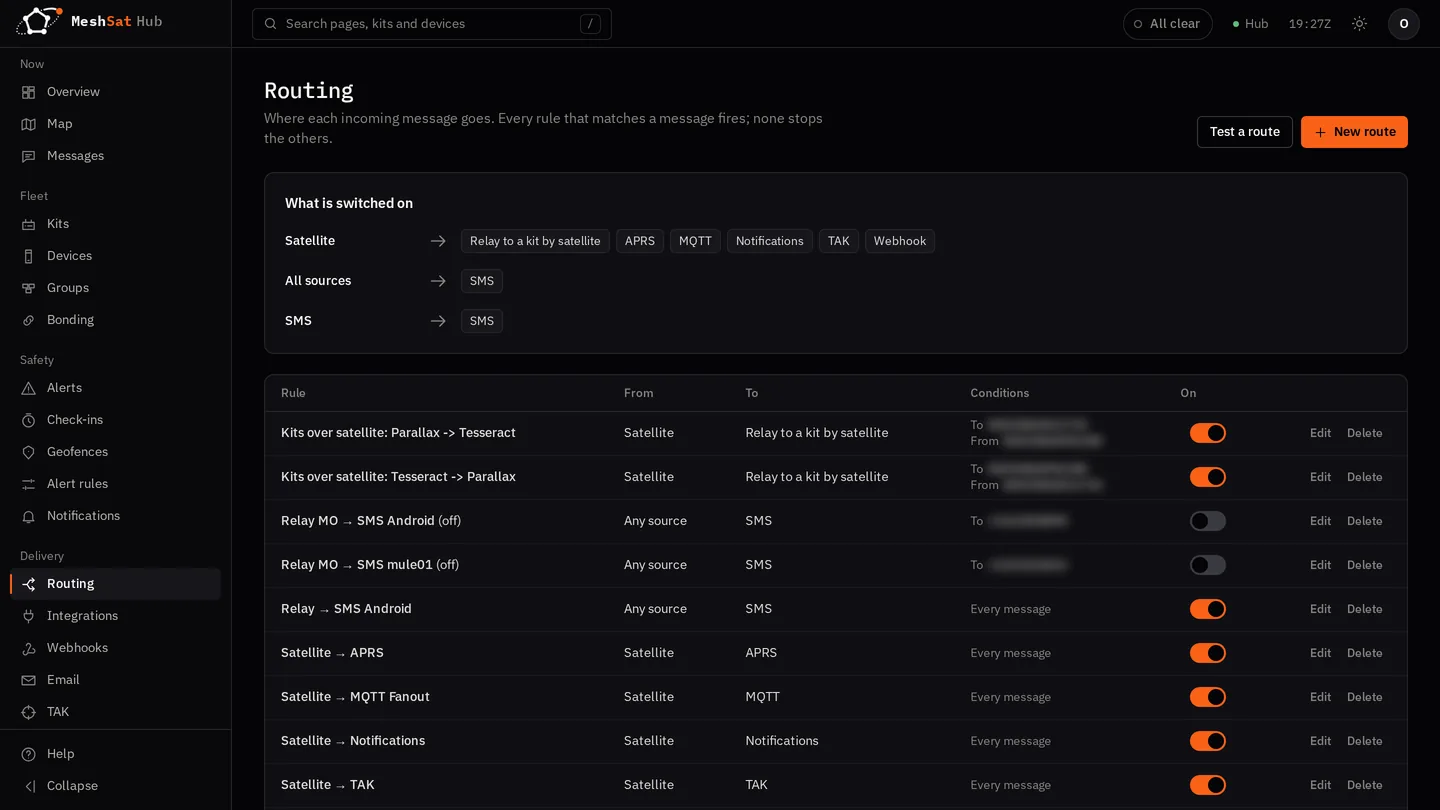
Routing decides what happens to a message after it arrives. A rule matches on source and sends to a destination: another bearer, a kit over satellite, a TAK server, APRS, a webhook, a notification, or the MQTT fan-out. Every rule that matches fires; switch one off with its toggle rather than deleting it, and use Test a route to see which rules a sample message would fire without sending anything.
Two things worth knowing before you add a rule:
- A wildcard source matches everything, including test messages. A rule that relays to SMS will text a real phone the first time you try anything.
- Delivery happens once per route per message even though the Hub runs more than one replica.